Showing posts with label blood pressure. Show all posts

Monday, March 1, 2021

Health benefits of drinking raisin-soaked water

Raisins in a wood container

This article is written by Sparkle Purpose. Follow Sparkle Purpose on Twitter and Pinterest.

Benefits of drinking raisins soaked water

1. Keeps your blood pressure in check
2. Lowers cholesterol 
3. Boosts energy 
4. Helps to detox your body
5. Helps with digestion
Health benefits of raisin water

Don't you just love raisins? Who knew that dried grapes were such a rich source of fiber, vitamins and minerals?

If you soak raisins in water overnight and drink that leftover water, it could actually be more beneficial for your health.

1. Raisin water keeps your blood pressure in check

According to research, raisins are a rich source of potassium, antioxidants and dietary fiber.

All of these nutrients help to keep your blood pressure under control.

Potassium keeps the blood flow stable and helps the heart to pump blood. Antioxidants help the endothelium - an inner layer of the arterial blood vessel.

Raisin water contains dietary fiber. It helps with the digestion process and burns fat.

Raisins (and water from soaking raisins overnight) lowers blood pressure, helps with digestion and burns fat.

2. Raisin water lowers cholesterol 

Cholesterol is another problem that can be solved with raisin water. Potassium and dietary fibers are hard at work once again. 

As I mentioned earlier, potassium and dietary fiber plays a critical role in keeping blood circulation stable. As a result, the cholesterol levels in your blood stay contained.

All of this helps your heart to stay healthy. Thanks to stable blood circulation, the heart doesn't have to pump blood at a faster rate. This keeps most types of cardiovascular problems away.

Wow, just one glass of raisin water could do all of that!

Raisins and raisin water improves blood circulation, lowers blood pressure, reduces cholesterol and boosts heart health.

3. Raisin water boosts energy 

When you see people waking up in the movies, they usually have a lot of energy. It's a different story in reality. Our heart lowers our blood pressure so that we can rest properly when we sleep.

Our body is still coping with that when we get up in the morning. That is why we don't feel very energetic right away.

Drinking raisin water in the morning can be very helpful and gives you an energy boost.

Raisins were found to be a good alternative to sports jelly beans in a study with 10 healthy athletes.

Raisins also contain micronutrients that help to boost metabolism and stamina.

One glass of raisin water every day may just help you to keep the doctor away.

Since we are talking about boosting energy, many people turn to energy drinks for help. Well, raisin water can be a good alternative to that too - and much healthier.

Raisins boost energy levels as effectively as some sports supplements.

Read more - Is sugar a poison to your body?

4. Raisin water helps to detox your body

If you're someone who likes eating junk food, your kidneys and liver are hard at work to ensure your well-being.

These are your body's protectors against toxins and nasty chemicals. Unfortunately there are so many of these toxic particles that they can overwhelm our protectors sometimes. 

Our poor bodies are loaded with more toxins than what they can expel.

This is where raisin water comes to the rescue yet again.

This unlikely hero boosts the body's digestion process because of the dietary fiber in raisins.

Fiber acts as an elixir to your digestion process. Fiber binds to toxins so that they can be eliminated.

Additionally, the antioxidants which we spoke about earlier also help to boost the functions of your liver and allow it to perform at its best.

Sweating is also a great way to detox your body.

Now you have one more reason to drink raisin water every morning.

Raisins and raisin water detoxifies your bloodstream, liver, kidneys and digestive system thanks to its fiber and antioxidant content.

5. Raisin water helps with digestion 

The combination of potassium that helps your blood circulation, and your one true friend, fiber makes this gargantuan task of regular digestion possible.

This duo makes sure that your intestines are doing the job that they were meant to do.

Ease your digestion process with nutrients that your body wants. When you consume a lot of food that has other toxic properties, the intestines may find it difficult to process that food. This can give you some serious stomach related problems.

This is why if you drink raisin water every morning you're empowering this area of your body to function at its best.

A happy tummy leads to a happy life.

The potassium and fiber in plant foods like raisins and raisin water help your digestive system to work properly.

Read more from Sparkle Purpose:


Woman skipping with a rope
6 Benefits of skipping rope for your well-being

Steaming glass of hot water
Drink hot water for weight loss.

Woman doing a plank exercise
5 Health benefits of doing planks everyday

Friday, June 19, 2020

11 Physical health benefits of mental relaxation

Man practicing mental relaxation by still waters
Mental relaxation is healthy.

Mental relaxation like yoga, aroma therapy and meditation is extremely good for your mental health.

It also has impressive benefits for your physical health. Today we examine how mental relaxation can improve your physical body.
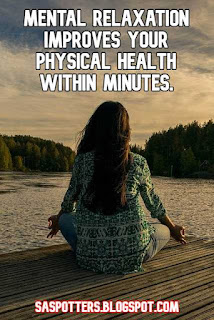
Mental relaxation improves your physical health within minutes.
Relax. It's good for you.

Physical health benefits of mental relaxation

There are many benefits of relaxation. They include:

1. Lowered blood pressure
2. Improved digestion
3. Maintenance of blood sugar
4. Improved blood flow to muscles and other tissues
5. Reduced muscle tension
6. Reduced chronic or prolonged pain
7. Better sleep quality
8. Higher energy levels and less fatigue
9. Less stress hormone activity
10. Lower heart rate
11. Slower breathing rate

List of the health benefits brought on by relaxation
Relaxation benefits almost everything.

1. Relaxation lowers blood pressure

Relaxing activities like yoga, tai chi, music, sitting in the sun, meditation, and relaxing social activities can dilate your blood vessels lower your blood pressure almost instantly.

Blood vessels dilate (expand) which helps blood to flow through them easier when you relax. This improves your body's ability to nourish itself all over.

The more often you relax, the easier it will be for your body to enter into a healthy state of relaxation. This is why doing relaxing activities or learning how to relax frequently can lower your overall blood pressure over time.

Relaxation lowers blood pressure instantly, and regular relaxation lowers total blood pressure throughout the day.
Blood pressure drops when you relax.

2. Relaxation improves digestion

Stress causes digestive issues like stomach discomfort, bloating, constipation, diarrhea, frequent toilet visits, ulcers, and an unhealthy change in appetite. It can worsen irritable bowel syndrome as well.

These issues may be acute (once off) in times of short-term stress, or chronic (doesn't go away) as a result of prolonged stress.

Mental relaxation helps to counteract the negative effects of stress on the digestive system.

This is why dome people need to go to the toilet or let out gas during relaxing activities like exercise - their digestive systems begin to return to a state normalcy as a result of the mental relaxation.
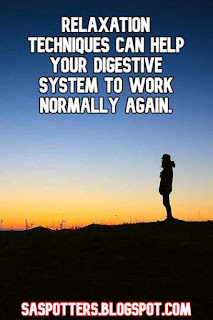
Relaxation techniques can help your digestive system to work normally again.
Share this image.

3. Relaxation helps to lower blood sugar levels

Stress triggers a chain of biological responses in your body. This is okay if it is balanced out with periods of rest and relaxation. When you stress too much, certain processes are left to run rampant while other processes never get the biological attention that they deserve.

Your body is not going to focus on healing itself, for example, if it thinks that it needs to gear up for impending danger.

Blood pressure and heart rate increase. Your breathing rate increases and you are more likely to breathe through your mouth. Muscles tense up in preparation for a burst of physical activity.

Digestion is put on hold until the body detects a time of rest and recovery.

Blood sugar levels can get real high during the stressful state because your body reacts to the stressful situation by pouring energy into the blood stream. When this energy isn't used, it is out of place and then damages your health.

Relaxation signals to the body that it can shut off these processes and go into a state of rest and recovery. Blood sugar is taken out of the blood stream and shuttled back into storage to be used at a later stage.

Your body puts off certain bodily processes like rest and recovery for times when there is no anticipated danger (stress). Relaxation activates these healing processes.
Relax more to heal more.

4. Relaxation improves blood flow to muscles and other tissues

When relaxation dilates blood vessels; blood circulation improves and blood flow increases. This helps with two very important things. 

Firstly, important nutrients like oxygen, energy and proteins can reach muscles and other tissues. This gives them the building blocks that they need to rebuild and function properly.

Secondly, by-products and toxins like carbon dioxide and old cells can exit muscles and tissues to be recycled or disposed of.


Increase the effectiveness of healthy habits by giving yourself enough time for good rest and recovery.
You need rest to succeed.

5. Relaxation reduces muscle tension

Stress indicates a danger that we need to escape from or a prey that we need to catch. Our minds and bodies work together in order to ensure our maximum chances of survival in these situations.

Stress tenses muscle fibers in preparation for a burst of physical activity. When we stay in the stressful state for longer periods of time, tension gradually increases. Tension gets greater over time because every fresh moment of stress adds to existing tension.

Periods of relaxation signal to our brains (and therefore our bodies) that the dangerous situation has passed and that we can go back to normal.

When the signal to relax does not come after an extended period of time (or if it comes too infrequently to balance out stressful situations), tension build-up leads to things like muscle knots, aches and pains, restricted blood flow and bad postural development.

This is why exercise is so good for things like mental stress. It is clear to the mind and body that the period of danger has passed at the end of the workout. People who stress and don't exercise live in a constant biological state of danger anticipation.

The bodies of people who exercise live as though the dangerous situation is gone. Every stressful situation then starts with a relaxed and healed body instead of adding to existing tension.

Relaxation also tells the body that the dangerous situation is gone and that they can therefore start internal healing processes.

Relaxation prevents the negative effects of stress.
Relaxation is essential to health.

6. Relaxation for pain

Studies show that relaxation reduces both chronic (persistent) and acute (once-off) pain.

Web MD explains that chronic stress is one of the factors that contribute to pain, and that relaxation exercises can help with natural pain relief as part of your pain management plan.

The pain response is very similar to the stress response. Heart rate, blood pressure, breathing rate and muscle tension all increase. Both pain and stress hit your nervous system hard. It is hard for the body to relax or to heal in this kind of state.

Web MD mentions studies that reveal that just thinking about a stressful event (or talking about it) causes a dramatic increase in back tension for patients with back pain.

Stress can increase the harshness of pain, while relaxation dulls its effects.

An elevated sense of well-being from relaxation helps people to cope with pain as well. It helps to mitigate the frustration that chronic pain tends to cause - the frustration that makes the pain worse to begin with.

Stress increases sensitivity to pain. Relaxation improves pain tolerance.
Use relaxation for pain relief.

7. Relaxation increases sleep quality


Most techniques that help you to sleep are techniques that help you to relax.

Our bodies go through periods of high energetic activity and restfulness. Hormones tell us when to be active and when to relax. We are supposed to relax before bed time in order to get the best amount of high quality sleep.

It is almost impossible to get good natural sleep without being in a state of relaxation. Regular relaxation activities will help you to fall into a state of relaxation that is conducive to good sleep much quicker.

Imagine being able to sleep as soon as you want to.

Relaxation will also improve the quality of your sleep. This means that every hour of sleep is much more valuable in terms of its restorative effect on physical and mental health.

The more relaxed you are when you fall asleep, the better you will feel when you wake up.

Relaxation techniques improve your ability to fall asleep and improve overall sleep quality.
Relax to sleep better.

8. Relaxation for higher energy levels

Relaxation can improve your energy levels.

The fact that relaxation improves blood pressure, digestion, blood sugar, blood circulation, muscle tension, pain, sleep, stress and breathing means that your body can heal itself.

You will be healthier and your body can finally heal from issues that it has been putting off because it was in a constant state of stress. Freedom from stress frees up precious energy that your body can use for other functions like healing and recovery.

There's only so much healing that you can do. Once you have received the healing that your body needs, energy levels will improve as you have more physical energy at your disposal.

Regular relaxation improves energy levels by healing the body.
Relax for energy.

 9. Less stress hormone activity

The stress hormone cortisol isn't a bad hormone. It has very important functions. It helps to turn nutrients into energy and gives you the motivation to get up and do different activities.

Cortisol becomes unhealthy when we have too much of it. This happens when we stress at a higher intensity than what we should. It also becomes unhealthy when it is elevated for extended periods of time.

Cortisol should rise sharply in the morning when we wake up to give us energy for the day. It should slowly taper off to reach its lowest point when we sleep.

Stress throughout the day triggers an up-regulation of cortisol so that it doesn't slowly taper off. This is why so many people struggle to fall asleep at night.

Exercise can modulate sleep patterns through many different mechanisms. One of them is the ability to push cortisol back into healthy levels.

Relaxation is a great countermeasure against stress. It can reduce cortisol by the same degree that stress increases it.

This will help you to keep your stress hormone (cortisol) levels in balance so that it serves you but doesn't burn you.

Stress is good for you. Too much of it is the problem.
Use relaxation to reduce stress.

10. Relaxation to lower heart rate

High blood pressure, high blood sugar, rapid breathing and a faster heart rate are all cardiovascular responses to stress that aren't bad for you if they come and go in the way that they are supposed to.

Stress triggers these conditions while relaxation does the opposite. These conditions become chronic when the presence of stress, in the absence of relaxation, causes an elevation without the opposing reduction.

This puts a lot of pressure on your cardiovascular system. Your heart shouldn't have to labor at a stressed rate all of the time. It needs periods of relaxation. The risk of various heart diseases (and other cardiovascular disease) increase without vital periods of relaxation and recovery.

Give yourself some much-needed relaxation time to balance out the physical effects of mental stress.

Stay healthy. Balance out times of stress with times of relaxation.
Give your heart a break.

11. Slower breathing rate

A high-paced, stressed-out state of mind increases your heart rate and your breathing rate.

Some physical bodily processes speed up (like heart rate and breathing) while others slow down (like digestion and healing) to help you survive in periods of stress.

Our bodies need to slow down in order for other bodily processes to become a priority. When you slow down mentally, your breathing rate and heart rate will slow down as well.

Blood pressure will drop and your body will experience a shift in energy.

Mood changes include a change in attitude, similar to enlightenment.

Digestion works better and the immune system can work in the way that it is supposed to.

Healing processes that have been put off can come back online to restore your body.

Many people use techniques to slow their breathing so that their bodies can enter into this healing, restorative state. Your breathing rate will slow down automatically when you relax.

Breathe Fleece Blanket Black
Support our website and buy this awesome Fleece Blanket!

Tuesday, June 2, 2020

Day 2 (48 hours) into my water fast

Water being poured into a glass
This is what happened at the end of my second day

Fasting disclaimer

This information is for anecdotal purposes only. None of the information contained on this page is meant to serve as medical advice. I am simply sharing my own experience as I embark on an extended fast. Do you own research and consult your medical practitioner if you want to do a fast of your own.

Learn what happened during my 48 hour fast.
Check out the details below.

My experience during the second day of my water fast

I stand proud at the end of day 2, 48 hours into my extended fast. Here are the results and other comments that I have to say so far:

How much weight can you lose on a 2 day or 48 hour water fast?

I weighed 73.5 kg (162 pounds) at the end of my last meal. I weigh 69.5 kg (153 pounds) at the 48 hour mark. This equated to a 4 kg (9 pounds) reduction in weight. I'd estimate that only 2 kg (4 pounds) of this is actual fat mass. I had a full belly at hour 0. I have also lost a lot of water weight as my blood pressure dropped.

Most people should expect to lose about a half a kilogram (or a pound) of fat mass per day of fasting (see my first day's report for my clinical reference to that number).

I am losing more weight than normal because I already exercise regularly and eat healthy. My metabolism is good enough that my body automatically burns calories at a faster rate. 

I don't need to fast to burn fat. I'm doing it to see if it will cure my allergies.

Your metabolism determines how much weight you will gain or lose.
What you do outside of fasts is important.

The effects of a 2 day (48 hour) water fast on allergies and asthma

I felt noticeably better from yesterday (about the 24 hours mark) already. It is Tuesday night and I haven't taken an antihistamine since Sunday night (before the fast began).

I have not sneezed or produced excess mucus as a result of my allergies in these two days. It has been as if I don't have allergies at all. I blew my nose once in the last 24 hours.

I slept without any breathing issues at all last night. The fasting definitely has an immediate, preventative effect on my allergies. I would say that it works better than any antihistamine that I have tried.

I struggled to sleep due to the fasting last night but I breathed normally throughout the entire night. My chest did not close up at all and I breathed very easily right through the night until now (late into the following day). This is remarkably better than I would feel after using an antihistamine.

The long-term benefits of fasting increase dramatically with every extra day that you do. I don't have any allergy or asthmatic symptoms at all now, but I want fasting to cure it permanently - not stop it temporarily. 

The longer I go, the better my chances are at curing my allergies and asthma for good (see the documentary I linked to in my first day's journal for evidence of fasting's ability to cure allergies and asthma).

I will only know if the fast cured my allergies permanently when I start eating again. Stay tuned for that. I will update every day as I go on.

My allergies totally disappeared after 24 hours of fasting.
Fasting reduces allergies.

Low blood pressure during fasting

Your body lowers its blood pressure dramatically when you fast. It does this for a variety of reasons. Insulin, triggered by sugar from food, helps the body to hold onto salt and retain water. Without food, insulin drops and blood pressure plummets along with it. 

Secondly, your body uses a lot of water to flush out the by-products of ketosis - primarily at the beginning stages. It won't need to flush out the ketones as drastically as you go deeper into ketosis.

Last night (after 24 hours of fasting), I struggled to sleep well. My blood pressure was extremely low. I felt dizzy, light headed and ill. I could hear my heart beating loud in my chest. These are all classic signs of low blood pressure. The dehydration caused by water loss made me feel cold most of the time (dehydration can make you feel cold).

I contemplated ending the fast because I feared that I was pushing my body too far - I felt horrible and it kept me from sleeping well. I eventually decided to carry on seeing if my blood pressure goes back to normal - and it does!

I still feel light-headed, but not as much as I did last night/earlier this morning. I drank more water today to help my body flush out the ketogenic by-products without having to lose more water weight. I have been adding salt to my water to help my body retain more water.

I weighted 69.5 kg (153 pounds) this morning (36 hours into my fast), and I weigh exactly the same tonight (I weigh myself every 12 hours for this experiment). I have definitely lost fat between now and then. The fact that I haven't lost more body weight in 12 hours means that my blood pressure is slowly returning back to normal.

I feel better now than what I did about 16 hours ago. My experiment shows, so far, that blood pressure stabilizes after dropping during a fast.

The transition is the hardest part when it comes to your health.
It gets easier along your fast.

Low energy from fasting

I felt hungrier than anything during day 1 of fasting. My hunger is starting to stabilize. The temptation to eat, being around a family that eats regularly, is still quite strong.

Today, more than anything else, I feel weak and low on energy. My body feels like it is so much heavier when I get up and lift my arm, for example.

I am happy that my blood pressure is going back to normal because I would hate to feel weak and dizzy at the same time.

This is probably because of the fact that my sugar stores are running out and my body needs to learn to rely on fat exclusively. For all the weakness, I have the feeling that my energy will return to normal (or possibly better than normal) shortly.

It is normal to have an initial energy drop at the beginning of your water fast. It returns to normal at day 3 to 4.

It is wise to learn when to stop and when to keep on going.
Know your limits.

See the report on my first day (24 hours) of fasting.
See the results of my third day of fasting.
Check out my fourth day of fasting.
Here are the effects 24 hours after I end my water fast.

Stay Strong!

Breathe Kids Crew Neck Sweatshirt Maroon
Support our website and buy this awesome Sweatshirt.

Sunday, June 30, 2019

The 11 Causes of Low Blood Pressure (Hypotension)


Low blood pressure is only considered a problem if it brings about negative side effects. Read more about the 9 symptoms of low blood pressure here; which can include low energy, lack of concentration, poor blood circulation leading to cold hands and feet, sensitivity to cold temperatures, nausea, fainting and more.

Blood pressure refers to the amount of pressure between blood and blood vessels, similar to the way that pressure allows water to flow through pipes and out of taps when opened. Low blood pressure may reduce the amount of blood made available to the rest of the body. Normal blood pressure should create a good blood flow without any blockage.

Why does blood pressure drop? 

Our blood pressure naturally fluctuates throughout the day. It should be the lowest at night before and during sleep, while increasing in the morning and slowly tapering off towards the end of the day. Changes in body position, breathing rate, stress level, physical activity and food or water consumption affect blood pressure. Overall health affects blood pressure as well - a healthier body is better able to regulate blood pressure and heart rate.

Causes of Low Blood Pressure:

1) Dehydration

Dehydration reduces blood volume and therefore blood pressure. This can result in weakness, vomiting, fainting and eventually death. You can get dehydrated from being in hot climates or exercising for too long with replenishing liquids. Illness is another cause for dehydration. Sweating and urination lead to water loss. It is also important to replenish electrolytes and minerals, not just water.

2) Loss of Blood

Sever blood loss can be fatal as blood pressure drops below what the body needs to circulate oxygen, nutrients and by-products like carbon dioxide. In healthy individuals, a small drop in blood pressure from a little blood loss through a cut or scrape is not potentially fatal - as long as the bleeding is stopped through a band aide or bandage as soon as possible.

3) Not Enough Nutrients

A lack of sodium and other electrolytes can reduce the body's ability to hold onto water and therefore decreases blood pressure. This is why it is important to replace electrolytes after strenuous exercise or sweating, or after diarrhea or vomiting. Other nutrients obtained through food are also important in maintaining blood volume. B vitamins, iron and folate are needed to produce red blood cells. Lack of these nutrients can lead to anemia and cause low blood pressure.

4) Poor Heart Health

Your heart is responsible for pumping blood through your body continuously. Blood pressure could drop as a result of a heart complication or poor hear health. Bradycardia, for example, is a slower-than-normal heart rate which decreases the amount of times that blood is pumped throughout the body. Other heart problems like heart attacks and heart failure dramatically decrease blood pressure.

5) Unbalanced Hormones


6) Anaphylaxis

Anaphylaxis is a severe, life-threatening, allergic reaction to a specific food, medication or insect bite. Anaphylaxis causes breathing problems, itching, a swollen throat, hives and a potentially dangerous drop in blood pressure.

7)  Septic Shock

Spesis, or septicemia, occurs when an infection spreads to the blood and then spreads throughout the rest of body. This can drop blood pressure down to life-threatening levels.

8) Pregnancy

Blood pressure can drop during pregnancy as circulatory systems rapidly expand. Blood pressure should start returning to normal after giving birth.

9) Drugs and Medication

Certain drugs can cause blood pressure to drop. These include diuretics, drugs used to lower high blood pressure, Parkinson's disease medication, some antidepressants, sexual enhancement drugs, other medications and some heart drugs.

Examples of these drugs include furosemide (Lasix), hydrochlorothiazide (Maxzide, Microzide), prazosin (Minipress), atenolol (Tenormin), propranolol (Inderal, Innopran XL), pramipexole (Mirapex), levodopa, doxepin (Silenor), imipramine (Tofranil), sildenafil (Revatio, Viagra), tadalafil (Adcirca, Cialis) and nitroglycerin.

10) Standing (Orthostatic or Postural Hypotension)

When blood pressure drops after moving from a seated or lying position to a standing position, it is called orthostatic or postural hypotension. In these cases, blood pressure drops when you stand up after a relatively long period of time.

Blood pressure can also drop when standing for too long, as gravity pulls blood to the lower parts of the body. This is usually regulated by constricting blood vessels and increasing heart rate, but people with orthostatic hypertnsion can get dizzy or light headed after standing for too long because the body is not bale to regulate the drop in blood pressure properly. In severe cases, this can lead to fainting.

Neurally Mediated Hypotension 

Neurally mediated hypotension can also lead to low blood pressure from standing for too long. This happens because of distorted brain signalling which creates a miss-connect between the brain, heart and legs.

11) Food Intake (postprandial hypotension)

Postprandial hypotension is a condition that refers to dropped blood pressure after a meal. This happens because blood is directed to the digestive system after eating for the digestive process to take place. The body usually regulates this by increasing heart rate and constricting blood vessels. Postprandial hypotension refers to the failure of these mechanisms to increase blood pressure after the drop from food intake. Ironically, postprandial hypotension is more common in people with high blood pressure. Eating smaller meals more regularly, instead of larger meals less often, may help to reduce the effects of postprandial hypotension.


If you feel like your blood pressure is too low or too high, consult with your medical practitioner immediately. Stay Strong!

Breathe Women’s Classic V-neck Tee Shirt Navy
Support our website and buy this awesome Tee Shirt.