Showing posts with label metabolism. Show all posts

Thursday, February 18, 2021

Health benefits of almonds

Almonds

This article is written by Sparkle Purpose. Follow Sparkle Purpose on Twitter and Pinterest.

Almonds deserve a blue-ribbon award for being a perfect snack. Besides being delicious, they are loaded with essential minerals and vitamins.

What makes almonds healthy?

Almonds contain vitamin E, magnesium, omega-3 fatty acids and calcium.

1. Almonds are good for your heart

2. Almonds improve natural energy levels

3. Almonds help to lower cholesterol

4. Almonds improve brain health

5. Almonds strengthen teeth and bones

6. Almonds regulate blood pressure

7. Almonds help to reduce the risk of colon cancer

List of health benefits of almonds

Should you soak almonds and other nuts before eating them?

Mother Nature put a lock on the healthy ingredients in almonds.

If we don't know how to best extract all of their goodness, a lot of their beneficial nutrients will pass through our digestive system without being absorbed.

The secret is to soak them in water overnight. Almonds gladly release their nutritional magic when you do so.

Eating pre-soaked almonds makes them much easier for our bodies to digest. We obtain these valuable nutrients through proper digestion.

Actually, this soaking method should be used with most seeds and nuts like walnuts.

Soak nuts and seeds like almonds and walnuts in water overnight to increase their digestibility. This increases essential nutrient absorption.

Health benefits of almonds

1. Almonds are good for your heart

The vitamin E within these tasty almonds reduces the risk of heart disease. Magnesium works to prevent heart attacks at the same time.

Mono-unsaturated fats, protein and potassium are other ingredients in almonds that support heart health.

Vitamin E, magnesium, potassium, mono-unsaturated fats and protein in almonds make them good for heart health.

2. Almonds improve natural energy levels

Snacking on soaked almonds daily can boost your energy levels. This is because almonds can speed up your metabolism. Hats off to the minerals on parade: manganese, copper and riboflavin.

Read more - What happens if you eat 4 almonds every day?

Manganese, copper and riboflavin in nuts like almonds support healthy metabolism.

3. Almonds help to lower cholesterol

Almonds have calcium and vitamin E. They work together to lower your cholesterol.

Avoid calorie dense food (fast food and processed food) and choose nutrient dense food (fruit and vegetables and nuts and seeds) to help lower your cholesterol even more.

The calcium and Vitamin E in almonds help to lower cholesterol.

4. Almonds improve brain health

The rich nutrients that we get by eating soaked almonds will nourish the brain. These powerful properties can increase our brain’s functionality.

Riboflavin and L-carnitine work together to increase brain activity. This collaboration generates new neural pathways, which can lower the risk of Alzheimer’s disease.

Riboflavin and L-carnitine in almonds support brain health and generate new neural pathways.

5. Almonds strengthen teeth and bones

Our bones depend on a constant supply of vitamins, minerals and phosphorus.

This trio functions seamlessly to strengthen our teeth and bones. Almonds and other nutrient dense foods can keep us protected from conditions like osteoporosis.

Your teeth and bones need a steady supply of vitamins and minerals to stay strong.  Eat plenty of nutrient dense foods to prevent diseases like osteoporosis.

6. Almonds regulate blood pressure

We need to stabilize our blood pressure by balancing the mineral content of the food that we eat. The typical western diet is high in sodium and low in potassium.

Sodium raises blood pressure while potassium helps to decrease it.

Almonds are low in sodium and high in potassium. This makes almonds one of the foods that we need to eat to keep our blood pressure within a healthy range.

Add them to other unprocessed plant based foods in your diet to regulate blood pressure.

Plant foods like fruit, vegetables, nuts and seeds are high in potassium and low in sodium. This helps to balance blood pressure.

7. Almonds help to reduce the risk of colon cancer

Research indicates that almonds can improve the progressive movement of food through the colon.

This lowers the risk of buildup and therefore, can keep us safe from colon cancer.

Nuts like almonds are shown to reduce the risk of colon cancer.

Check out other articles from Sparkle Purpose


Man sweating from exercise
9 Cool health benefits of sweating everyday


Group of people eating and watching television
Why you shouldn't watch TV while eating


A cup of coffee
How does caffeine affect your brain?

Monday, January 11, 2021

Top 10 Benefits of Strength Training

Man using weight to strength train on the floor
Strength training is very beneficial.

By Rob Maxwell, M.A. Exercise Physiology, CSCS, ACSM CPT from www.fittothemax.net. Follow him on Twitter.

The Benefits of Strength Training


1. Improves strength
2. Tones and builds muscle
3. Boosts metabolism
4. Prevents future injury
5. Prevents (and stops progression of) osteoporosis
6. Improves posture
7. Builds self esteem
8. Become better at sports and physical activity
9. Induces weight loss or fat loss
10. Improves balance

Strength training is no longer just for the so called 'jocks' and 'muscle heads' anymore. Most of us already know that, right? This is nothing new, but I think that many of us still struggle with that generalization.

When I started strength training in the late 80’s, I was in my teens and (like many other teens in the throes of puberty) I wanted to be stronger and look better.

Back then, I would say that people were still going to the gym mostly for that reason. This was in the 1980’s.

Now research and experience has shown us that strength training has far more benefits than just getting strong and buff. Let's take a look at them.

Benefits of strength training
Train for the sake of a better life. 

1. Strength training for general or functional strength

There is a difference between maximal strength and general strength.

Maximal strength is being able to lift or move something one time. When a person speaks of their bench press and states that they can bench press a certain weight, this is maximal strength. That is a big goal in power lifting and sport conditioning. 

General strength is simply being strong. Strength is important. You want to open that pickle jar, lift a box and get out of a chair. These are all components of strength.

We use a term called ADL’s in training. This stands for Activities of Daily Living. This means being able to do real life activities that you have always done.

More people are coming to my personal training gym so that they can improve in this area.

Your kids want you to go to a theme park, but you don't feel like you have the strength and stamina to do so. This is one example. You go to a grocery store, but you cannot lift the big bag of dog food into the cart. You don’t have the strength to carry your grand kids. That's another example.

We all want to be independent. We want to be able to do these things for ourselves. Strength training is important for keeping our body strong so that we can continue to be able to do all the things that we want to do.

Strength training gives you the power to do the important things in life.
Train today and be strong tomorrow.

2. Strength training to tone or build muscle

Strength training adds muscle - and that is a good thing.

Hypertrophy refers to muscle cell enlargement. That is what toning is. Tone is simply a partially contracted muscle. When you have less body fat, with muscle, you will look more defined.

It is important to have muscle on your body. You don't need to worry unless you have the genetics of a body builder. You will not 'bulk up' by accident. It does not work that way.

As you and I age, we lose muscle tissue - unless we are working out and putting muscle on. We want to keep as much muscle as possible because muscle mass boosts our metabolism.
You won't look toned without a decent amount of muscle mass.
Everybody needs to look after their muscles.

3. Strength training to boost your metabolism

As I have stated above, muscle mass improves your metabolic rate. The only way that we can increase our metabolic rate is by adding muscle.

The resting metabolic rate accounts for 60-75% of all the energy that we can burn. Energy means calories.

Have you heard of creeping obesity? This means that over the years people start to put on a few pounds every year until they become obese.

Many blame the metabolism for slowing down naturally. That may be a cause, but it slows down because people become inactive and they start losing muscle mass.

Combine natural regression with less energy being burned (lack of exercise) and the same or greater food intake... and you have weight gain.

What is the answer? Do not slow down! Stay active.

The most important thing is to always keep strength training in the routine. This will keep the muscle mass up and the metabolism up.
Strength training counteracts the natural slowing of metabolism.
Move it or lose it.

4. Strength training to prevent future injuries

One of the most frustrating things I hear people say is they are not going to the gym or not doing strength training because they are afraid that they are going to get hurt. 

That is all wrong. One of the main ways that we can avoid injury is to strength train. This keeps the muscles that surround and support the joints strong.

Sure, you can get hurt in a gym if you are training carelessly or following one of these new trendy programs that I will not mention here.

Strength training, when done properly, is what keeps your body strong. It keeps injuries away. 

Why? There are two reasons. Firstly, it strengthens the muscles that surround every joint and makes sure that the joints do not absorb all the pressure.

Secondly, it fixes muscle imbalances.

All muscles have what is called an antagonist. The antagonist is the muscle that opposes the muscle that is doing the work.

If a person has a job or plays a sport that uses one area of the body way more than its opposite muscle group, they will develop a muscle imbalance which could result in overuse injuries.

For example, a tennis player may develop nice strong fronts of the shoulders because of their stroke. If they do not balance those shoulders out, they will end up with a shoulder injury.

By going to the gym, they can train the posterior part of their deltoid and help to ensure that a tennis injury does not happen.

Strength training works by strengthening the muscles around a joint and corrects muscle imbalances.
Strength training stops your body from hurting itself.
Strength reduces injury risk.

5. Strength training to prevent or manage osteoporosis

Osteopenia and osteoporosis is the loss of bone density. Osteopenia is the start of bone density loss. Older women with slighter builds are typically the most susceptible to this.

Weight-bearing exercises such as walking help build bone density and help to prevent its loss for sure.

While this is true, strength training has been found to be the most helpful in preventing bone density loss.

The reason is because bones, like any tissue, build up from stress. When we walk, we are putting stress on our lower body and particularly the lower legs. But the rest of the body is not being impacted.

Areas of the spine are vulnerable to bone density loss. Therefore, strength training is an enormously powerful tool. You can stress each muscle group - which will stress the joint - which will stress the bone involved in movement. This prevents bones from breaking down any further.

Bone density, at this writing, does not come back.

We can, however, prevent further break down through proper strength training - and secondarily, with weight-bearing exercise.

Your bones get weaker if you don't do exercises like strength training regularly.
Exercise has a long term effect.

6. Strength training improves posture

Quit sagging! Stop leaning over! Stand up straight! Put your shoulders back! Flaunt what God gave you!

Have you ever heard of any of these things? I am sure that you've heard at least one!

Posture is important. It says a lot of how we feel about ourselves. If we are hunched over, we may be hiding or feeling depressed or defeated.

Or it can simply mean that we have muscle imbalances from standing or sitting a certain way repeatedly. All this can be corrected by proper strength training.

When we have muscles that are overactive, they are going to pull us in a different direction. When we strength train properly, we can work the opposite motion and pull them back.

Strength training is the most important factor in posture and muscle imbalances. You can't correct a muscle that is too weak to pull its own weight.
Posture suffers when strength training is neglected.
Weak muscles hurt posture.

7. Strength training builds your self esteem

Yes, I suppose all exercise builds your self-esteem. It’s true. But there is something special about getting stronger.

I can remember when I was a kid and had my first cement free weight set. Remember those? I had it set to bench press of course. Why do anything else? Bench press and curls baby! That is what 13-year-old boys care about. But I digress.

I remember targeting a goal of 100 pounds on the bench press. I was working hard. It wasn't smart, but I was trying to add weight every time. I wanted that 100 pounds! And I finally hit it. After a few attempts, I was able to get the barbell off my chest and all the way up.

I felt great! I felt proud! I walked a little prouder and taller. I see this all the time in other people. When they get stronger, they feel good about themselves.

Think of all the ancient gods from Greek Mythology. How were they portrayed? They are strong and muscular.

There is something that makes us feel exceptionally good and strong when we are strong!

There is a type of confidence that you can only get from strength training.
Accomplishment matters.

8. Strength training helps you to be better at sports

In athletics, we call them strength and conditioning programs for a reason.

I have a Certified Strength and Conditioning Specialist certification from the National Strength and Conditioning Association. I am proud of this certification. You must have at least a 4-year degree to sit for it. It is challenging and particularly good.

Sports have become big business, so teams want trainers that know what they are doing.

Strength and conditioning can be taken too far with athletes these days, especially younger athletes. Our athletes are overtrained.

But correctly done strength and conditioning programs will, without a doubt, make you better at your sport.

I do not agree with all the specificity that goes into some of these programs. I do not think that working on a golf swing like exercise at the gym will make you swing a golf club better. I think swinging a golf club will make you swing it better.

But I do believe that working on all the general strength and conditioning exercises will make an athlete significantly better at his or her sport.

If you are in great shape you will not get tired no matter what you are doing. If you are not getting as tired as usual, you can stay on top of your game for longer without injury.

It is extremely hard to focus and move safely when fatigued. In fact, you may have heard the saying that 'fatigue makes cowards of us all'. It is true. And I already covered injury prevention above, but suffice it is to say strength training is a great insurance policy against getting muscle and joint injuries.

This is critically important for athletes, correct? Again, you must do the program the right way. You do not want to over train and work all the muscle groups you are already using in your sport.
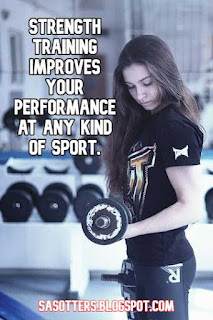
Strength training improves your performance in any kind of sport.
Focus on strength, endurance and injury prevention.

9. Strength training for weight loss or fat loss 

I had to put weight loss all the way down here to get you to read to this part!

We talk about weight loss, but its fat loss that really counts. Do we really want to lose weight indiscriminately or do we want to lose fat?

Correct: we want to lose fat. If you stated that it does not matter, quit reading and call me right away.

We want to lose fat. Studies show that diet alone can lead to some weight loss. Diet with cardio can lead to even more weight loss than just dieting alone. But diet with cardio and strength training leads to fat loss and muscle gain or at least muscle retention.

We don’t want to lose muscle when we lose weight because when we lose muscle, we slow our metabolism down.

We want to lose fat. We lose fat via strength training by increasing muscle mass and thus raising the resting metabolic rate. Strength training burns calories.

Strength training also promotes after burn, which means that you burn more calories after you’ve finished strength training than you do after steady rate cardio because your body continues to burn energy as it repairs itself.

Strength training is the secret to accelerated fat loss.
Don't lower metabolism to lose fat.


10. Strength training improves your balance

You think that that balance is all inner ear, right? Or does it have something to do with something other than strength and muscles?

Well, balance is a complicated thing. Strength and muscle mass can improve your balance.

Sometimes we have balance issues because the tiny stabilizer muscles in our ankles or lower limbs are atrophied (weakened). They cannot do their job.

When strengthened, they support the foot and ankle so that the foot can dig in and do its job and the ankle is strong enough to support it.

Think of a stability ball. Have you seen those? They look like half a ball with a flat base at the bottom. They are typically blue.

When you stand on them (or have attempted to for balance training), you will see all those tiny stabilizer muscles shake and quiver.

As you get stronger, you will notice that they do not shake and quiver like they used to.

And just like that, you can go lower because your balance is better! Strength and balance are quite interrelated.
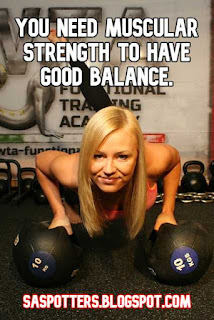
You need muscular strength to have good balance.
Strength creates stability.

Summary

Strength training isn't just for the big, buff, muscle head anymore!

Strength training is for everyone - from the teenager to the athlete to the new mom and the grandfather!

Strength training can make you bigger, stronger and toned. It will increase your metabolism, prevent injury, build bone strength and decrease bone loss, help you recover from injuries, fix muscle imbalances, improves posture, build self-esteem, help you to become a better athlete, help you to lose fat and maintain muscle while dieting and improve your balance.

Not a bad gig huh? 

By Rob Maxwell, M.A. Exercise Physiology, CSCS, ACSM CPT from www.fittothemax.net. Follow him on Twitter.


Monday, June 15, 2020

The effects of cold exposure on gut bacteria

Icy snow flake in the cold
Is the cold good for your gut microbiome?

How does cold therapy affect gut bacteria?

We know that cold therapy is good for health and that you can't be healthy without the right gut bacteria, but what effects does the one have over the other? Do they interlink somehow? Let's see what the science says.

This is how cold therapy affects your gut bacteria.
Share this with your friends.

Cold exposure changes the gut microbiome

This study found that mice developed different gut bacteria when they were subjected to cold, compared to those who were kept at room temperature. These new microbes caused certain bodily changes in the cold mice.

When feces (containing gut bacteria) were transplanted from the cold mice into mice that didn't have any gut bacteria of their own, the recipients experienced body chances that were similar to the adaptions that they would have developed if they were the ones who spent time in the cold.

Their body fat turned from white fat (primary role of storage, causes obesity) into brown fat (primary role of heat generation, counteracts obesity). Insulin sensitivity increased and the absorptive surface of the digestive tract had increased in order to increase caloric absorption.

If you want more brown fat and less white fat, better insulin sensitivity, a faster metabolism and more nutrient absorption in your gut; your gut bacteria will do this for you when you expose yourself to cold temperatures.

This study proves that cold exposure and gut bacteria are closely interlinked. Cold exposure changes the gut microbiome - and the gut microbiome influences your body's ability to cope with cold temperatures.

Cold exposure changes your gut bacteria to be more sensitive to insulin, improve nutrient absorption, increase metabolism and burn fat for heat.
Temperatures affect your gut bacteria.

Exercise and cold exposure improve gut health when combined

This study looked at the effects of exercise on gut bacteria under different temperatures. They had obese mice exercise at room temperature, short bursts of cold and a longer period of cold or sustained coldness.

They concluded that exercise lead to more conversion of fat from white fat to brown fat when done in the cold, compared to exercise on its own or cold exposure on its own. Other health markers like cardiovascular health and metabolism were mostly improved when exercise and cold exposure was combined.

They say that exercise reversed some of the effects that colder temperatures had on gut bacteria and therefore protected against cold-induced cardio-vascular damage.

The moral of the story is this: Exercise combined with cold exposure reduces obesity and improves cardiovascular health more than cold exposure or exercise on its own.

Your get more health benefits when you combine exercise and cold exposure than if you did either on their own.
Combine cold exposure with exercise.

Does this mean that cold exposure is good for our gut microbiome or not?

What we do know for sure is that cold exposure triggers changes in gut bacteria that are favorable to our overall health.

Cold exposure creates a gut microbiome that increases our metabolism, converts white fat into brown fat (which is a good thing), increases absorption of nutrients from food, improves glucose metabolism, reduces obesity and increases insulin sensitivity.

I could not find any studies or hard scientific evidence that found an increase or decrease in specific types of gut bacteria, whether good or bad, as a result of cold exposure. If you know of any research on this, please let me know in the comments below.

What I can look at, though, are how the changes brought on by cold exposure will affect the gut microbiome.

Physical changes in health brought on by gut bacteria

We know that these changes are brought on by gut bacteria (independent on the body's own adaptions) because these changes happen to mice when they receive the gut microbes from cold-exposed mice.

1. Improved insulin sensitivity
2. Increased brown fat
3. Increased nutrient absorption
4. Better glucose metabolism
5. Reduced obesity or white fat mass

List of ways that gut bacteria affect the host in response to cold stimulus
Cold-exposed gut bacteria change our bodies.

We still have a lot to learn about our gut bacteria and how they interact with various stimuli like cold exposure. What we do know for sure is that the long term effects of cold exposure, mediated by gut bacteria, are beneficial to our health in many ways. The positive health effects of cold exposure are dramatically increased when you add exercise into the equation.

In my personal opinion, we will probably find out with future research that overall fitness, on many levels, improves the composition and diversity of gut bacteria in our digestive system. I suspect that cold exposure, heat exposure, exercise and other extrinsic stressors that force the body to get stronger will ultimately improve gut health. Stay Strong!

Breathe Women’s Tri-blend Tee Shirt Camo
Support our website and buy this awesome Tee Shirt.

Friday, December 6, 2019

Definition of Fitness

What is fitness?
There is a big difference between fitness, health and looking fit
Many people assume that health, fitness and looking good are the same thing. Although they all work together in a synergistic way, they are very different.

Definition of fitness

Fitness refers to your body's physical ability to do a certain task. Exercise directly improves fitness. The more you can exercise, the more fit you are. Fitness generally alludes to physical capability, but mental fitness refers to how much work you brain can do and emotional fitness refers to the health of your emotional state.

The difference between health and fitness

In its plainest form, health refers to the absence of bodily issues. Your body is healthy if it is not overweight, underweight, sick or with disease. Health is a state of being. Fitness is action orientated. It refers to what your body can do.

The connection between health and fitness

The more that your body can do, the less health complications you will have - and the healthier you will be. Fitness, therefore, leads to greater health. The more fit you are, the better your body can look after itself. Fitness increases energy levels. Extra energy allows your body to fend off diseases better and improve its overall well-being.

The two types of fitness

Fitness can be broken down into two different types.

Cardiovascular fitness

Cardiovascular fitness refers to the amount of physical exertion your body can take before getting tired. Cardio is taken from the Greek word 'kardia', meaning 'heart'. Vascular refers to your circulatory system. Cardiovascular fitness, therefore, addresses how well your heart, blood vessels and lungs can pump nutrients to the rest of your body while clearing toxins away. If you get easily winded after climbing a flight of stairs, you need to focus on improving your cardiovascular fitness.

The more cardiovascular fit you are, the stronger your heart, lungs and circulatory system will be. This is why exercise is so important for preventing diseases that pertain to the heart, lungs, brain and blood circulation.

Structural fitness

Structural fitness refers to the strength of the body parts that do the actual task. These parts include the muscles, joints, bones, tendons and ligaments. If you feel pain in your neck, back, leg or arm muscles throughout the day; you need to improve your structural fitness.

Exercise is important to fortify bones, keep joints supple, strengthen muscles and keep the central nervous system working properly.

An easy way to distinguish between the two is this: 

If you need to catch your breath, improve cardiovascular fitness. Aches or pains indicate a need for better structural fitness.

What are the 5 components of physical fitness?

Fitness can also be broken down into 5 separate components. Myzone explains this beautifully.

The 5 components of fitness

Share this image with your friends by hovering over the image.


1. Cardio vascular fitness

Cardio vascular fitness refers to how well your body can operate in a higher state of energy for a prolonged period of time. 

Exercises that aim to train this aspect of fitness will improve the way that the heart, lungs and blood vessels (along with other organs like the liver) break fat down into usable energy. They train the heart and lungs to pump fresh oxygen throughout the body while disposing of negative by-products like carbon dioxide and lactic acid (see how lactic acid affects physical performance).

2. Strength

This component of fitness refers to how much force your body can exert on a task. Strength fitness includes muscular strength, bone strength, joint strength, ligament strength, the condition of the central nervous system and the mind-to-muscle connection (the percentage of muscle fibers that can be activated by signals sent from the brain). 

Exercises that build your strength will improve muscle fiber size, bone density, efficiency of synapses between nerves throughout the central nervous system (how well your body sends messages from one cell to the next) and joint durability.

3. Muscular endurance

Muscular endurance can almost be seen as a combination between cardiovascular fitness and muscular strength. The first one determines how long you can exercise. The second one determines the amount of force that your muscles can exert. Muscular endurance, however, determines how long your muscles can exert a force before they start to fatigue. 

Cardio vascular fitness is at its limit when you are of breath. Strength is at its limit when you can't lift a certain weight. Muscular endurance is at its limit when you feel your muscles burn during an exercise or they start to lose their ability to exert any force at all.

Exercises that improve muscular endurance train your body's ability to cope with stress for a prolonged period of time. It improves your body's ability to cope with physical pressure. This is why exercise improves your overall ability to cope with pain, stress and illness.

4. Flexibility

Flexibility refers to the component of fitness that determines your range of motion. The length that your muscles, ligaments, joints and tendons can stretch away from their neutral positions will indicate your flexibility fitness levels.

Flexibility training helps to avoid injury, stimulates the kind of cartilage in the joints that are more flexible, improves signaling between muscle neurons, stimulates the recovery process and improves blood flow. In essence, flexibility improves the body's suppleness.

5. Body composition

Body composition is the part of fitness that looks at how much fat your body has, compared to muscle and bone mass. This relates to fitness because of the connection between muscle size, bone density, fat mass and metabolism. 

Metabolism is the rate at which your body turns nutrients into energy. These nutrients can come from either food or fat stores. The higher your metabolism, the more energy your body will produce on its own. In fact, metabolism will determine how many calories your body burns when it isn't exercising at all (this is referred to as your basal metabolic rate).

Greater fat mass slows down your metabolism, while greater muscle mass speeds it up. Did you know that body temperature also directly affects your metabolism?

Fitness looks different on everybody
Share this on social media.


Fitness looks different on everybody

Don't expect to morph into a supermodel when you start to improve your fitness level. 

Weight loss is largely determined by genetics

Will improving your fitness help you to lose weight and keep it off naturally? Absolutely! Can you lose all the fat you that have by exercising regularly? Exercise will help you to burn a lot of fat if you do it properly, but how much you lose will be different to the person next to you. Your genetic makeup will determine how long it takes for you to burn those extra pounds. It will also determine how much fat you can lose in a healthy way.

Healthy is more important than good looking

Don't exercise more than what your body can handle. This will not only break your body down, but also rob of any motivation that you had to exercise in the first place. Start off small and give your body some time to adapt. Increase the intensity gradually when you feel comfortable with your current exercise routine.

Healthy is more important than good looking
Share this image on social media.


How to improve your fitness


Take the fitness challenge

If you want to improve your overall fitness, try doing our free 30 day fitness challenge. You don't need any equipment and it only takes a few minutes to complete the daily task.

Determine which form of fitness you need the most

Go through the 5 components of fitness listed above very carefully. Determine which one you feel like you need to work on, or the one that you think you would benefit from improving the most.

Go for a long walk around your neighborhood every day. This is a fantastic way to start working on your fitness levels. After a week or two, advance to running for part of the way.

If you feel like you need to improve your muscular strength or muscular endurance, try one of these programs that you can do at your local gym.

When you're just starting out on your fitness journey, be sure to include some of these fitness boosting foods to give your body the nutrients that it needs to get stronger. Remember to eat a diet that is nutritious while avoiding foods that are bad for you. Drink enough water to stay hydrated and flush away unwanted toxins. Stay Strong!

Breathe All-over Unisex Tee Shirt Baby Blue
Support our website and buy this awesome Tee Shirt.

Thursday, December 5, 2019

30 Day Fitness Challenge

Man doing a one-legged squat
See massive results in just one month!

Take a few minutes every day to complete the 30 day fitness challenge - whether you currently exercise or not. This challenge will jump-start your fitness goals. It will ignite your metabolism. Your body will burn fat for energy. This challenge will tone and tighten every part of your physique. You will sleep better, have more energy, weigh less and feel good in a matter of days. Discover how well a few minutes a day totally transforms how your body works.

The 30 day fitness challenge

How much can you improve your fitness in 30 days? What kind of results can you expect in a month? I have designed this 30 day fitness challenge to set your metabolism on fire. In just 30 days you will burn fat, build muscle and spark the changes that are needed for better energy levels.

Can I do the fitness challenge in addition to my current workout program?

Absolutely! If you are already exercising regularly, do this challenge as an addition to your current workout routine. It only takes a few minutes per day. This challenge will help you to blast past a plateau and set you back onto the path of getting actual results.

How does the 30 day fitness challenge improve my body?

It is so easy to get stuck in a routine. Our bodies are very good at adapting to whatever we do. If you don't exercise, your body adapts by reducing its energy output and storing saved energy as fat. When you do the same exercises all the time, your body will adapt by reducing the amount of effort that it puts into each workout. This will help it to save on calories (which go straight to fat storage) and lessens the effort it has to put into changing itself.

Physical transformation takes a lot of effort from your body's point of view. It will always try to do as little as possible so that it can save energy for an emergency. This 30 day challenge acts as that emergency. It will shock your body into burning fat and building muscle.

After the month is over, your body will have revamped its metabolism. This is great for adding a kick to your existing workouts. It is also great to get yourself moving in the right direction if you are new to exercise. Seeing big changes in a month will motivate you to do more and more every day.

What equipment do I need for the 30 day fitness challenge?

You don't need any equipment at all. This challenge is designed to be done wherever you are. You can do it at home, during your lunch break at work or at your friend's house while you are waiting for them to get ready. It also does not require much space. You don't need a special floor mat or any other kind of workout gear. This eliminates the excuse of not having time to go to the gym. You'll be done with your daily challenge in less time than it takes to get to the gym in the first place.

Fit woman who does the fitness challenge
Complete your daily task for great results


The 30 day fitness challenge

There is only one exercise that you need to do every day. Complete it and you're done for the day. Here's what you need to do:

30 day fitness calendar
Save this chart (right click, save image on desktop or long-press, save image on mobile) and print it out. Cross off the days that you complete. Bookmark this page so that you can print a new sheet whenever you do the challenge, or to hand it to friends and family who do the challenge with you.

Day 1: 50 Squats

Do 50 squats. If you can't do them all at once, break them up throughout the day. Don't go to bed until you've done all 50 squats. Squats boost the hormones that tone muscle and burn fat. Do body-weight squats without any weights. This is what a good squat looks like:


Day 2: Jumping jacks for 5 minutes

Do jumping jacks until you are out of breath. You can stop if you feel pain in your ankles, shoulders or knees. Set a timer to check how much time you've done. If you stop at 2 minutes, complete the other 3 minutes later on in the day. Jumping jacks ramp up your metabolism while toning up your whole body. Finish at a total of 5 minutes. This is what a jumping jack looks like:


Day 3: 50 Push Ups

Do 50 push-ups. Break them up if you can't do them all at once. Push-ups burn calories, speed up metabolism, tone your upper body and increase physical endurance. This is the best way to do a push up:


Day 4: Plank for 5 minutes

Planks are an isometric exercise that improves strength and stability. Just like with the jumping jacks, use a timer to count the time that you plank for. Do 5 minutes total for the day. If you can do this all in one go, well done! Most people will need to break it up into 2-4 separate exercises. You can spread it out throughout the day (leaving hours in between each time) or take a few minute breaks to rest until you're done. The choice is up to you. You will still reap the fitness benefits either way. If you can't decide which is best, I'd recommend doing the planks as close together as possible so that you can get it done and not have to worry about it later on. This is what a good plank should look like:


Day 5: Rest day

Congratulations for coming this far! Be proud of yourself. Take a well-deserved rest day. Feel good about the progress that you are making.

Day 6: 50 Lunges

Do a lunge onto one leg. Then lunge using the other leg. This counts as one lunge. Perform as many of these as you can in one go. Do more after resting. Lunge (on both legs) 50 times in total before the end of the day. Lunges are great for total lower body strength and endurance. Similar to the squat, they kick your metabolism into high gear and stimulate the hormones that burn fat. This is what a lunge looks like:

Day 7: Jumping jacks for 5 minutes

Do jumping jacks for 5 minutes total for the day, the same way that you did on day 2. Try to do the jumping jacks for as long as you can during each session. Your goal is to build up to the point where you can do all of the jumping jacks in one session. By the end of the 30 day fitness challenge, you should be able to complete all 5 minutes in one quick session.

Day 8: 50 Push ups

Do the same as day 3, trying to do as many per session so that you eventually land up doing them all in one session. By day 30, you should be able to all your push-ups in two sessions or less.

Day 9: 50 Crunches

Crunches are a favorite exercise for many people. Similar to the exercises above, do as many as you can in one session. Crunches work the muscles that are responsible for stabilizing your core. These muscles are what make up a visible 6 pack when your body fat is low enough. Do as many as you can in the following session until you have reached your goal of 50 crunches. This is how to do a crunch:


Day 10: rest

You deserve another day of rest. Well done for making it this far along the fitness challenge!

Day 11: 50 Squats

Do squats in the same way as day 1, trying to do more per session.

Day 12: 5 Minutes of jumping jacks

Day 13: 50 Push ups

Day 14: Planks for 5 minutes

Day 15: Rest

Day 16: 50 Lunges

Day 17: Jumping jacks for 5 minutes

Day 18: 50 Push ups

Day 19: 50 Crunches

Day 20: Rest

Day 21: 50 Squats

Day 22: Jumping jacks for 5 minutes

Day 23: 50 Push ups

Day 24: 5 Minutes of planks

Day 25: Rest

Day 26: 50 Lunges

Day 27: 5 Minutes of jumping jacks

Day 28: 50 Push ups

Day 29: 50 Crunches

Day 30: Rest

Congratulations for finishing the fitness challenge! I encourage you to take pictures of yourself before and after the challenge. Be sure to point people to our site if they ask how you look so much better so quickly (or keep it a secret - that's up to you).

30 day metabolism booster

Here are a few commonly asked questions about the 30 day fitness challenge


Will this challenge make me lose muscle if I lift weights?

You put a lot of hard work into building muscle mass. The last thing you want to do is throw your body into a catabolic state, which is where the body breaks down muscle for energy. If your current program is so intense that you feel exhausted or fatigued for hours after your last training session, I'd recommend not doing this fitness challenge just yet. Give your body some time to catch up with what you are currently doing first.

If you feel back to normal in an hour after training, your body will benefit from the metabolism-boosting effects of this training program. In fact, cardio can help you to build more muscle. A program like this fitness challenge might be exactly what you need to push your muscles into greater growth.

How does this challenge improve my metabolism?

Firstly, you need to understand what your metabolism is. Your metabolism refers to the rate at which your body turns nutrients (from food and fat stores) into energy. People with high metabolisms can eat more and still be skinny because their bodies turn all of those nutrients into energy.

Those with slow metabolisms will struggle to lose weight - even when they restrict their caloric intake. This happens because their slow metabolisms don't turn a lot of the nutrients into energy. Nutrients are stored as fat instead of being used.

Compound exercises (like the squats, push-ups and lunges) burn a lot of calories in a short period of time. This shocks your body into burning more nutrients for fuel as it tries to adapt to the intense physical activity. The metabolism-boosting effects of these exercises last for days. If you do them often enough, they can permanently increase your metabolism.

Cardio-vascular exercises like jumping jacks require a lot of calories as well because they force the entire body to move. Core-focused exercises like the planks and crunches improve the muscles around your waistline. These muscles are needed to do exercises like the squats and lunges. You will notice that you tense your core when doings the squats, lunges and push-ups. All of these exercises need a strong core to be done properly.

Why are the exercise numbers and times so high from day 1?

In this challenge, you start off with a high level of intensity right off the bat so that it can shock your body into transformation. The greater the shock, the more your body is forced into changing itself. Our bodies are wired to conserve as much energy as possible. It will only lose those extra calories if it feels like it really needs to do so.


Why don't the exercises increase in number or time in this challenge?

The numbers stay the same for two reasons. Firstly, the high numbers serve as a good shock to your metabolism right off the bat. The rest of the program facilitates your body's adaption to this shock. If you keep raising the intensity higher than what your body can handle, it may be more than what your body can bare. This could cause muscle to break down. We want the muscles to tone and strengthen while fat breaks down. If you challenge your body too much, it can hold onto fat mass instead of building muscle.

Secondly, the growth in the program does not lie in the total amount of exercises that you do. Instead, it lies in how much of the exercises you can do in one go. The first time you do 50 squats, it might take you 5 different sessions to finish them. By the end of the program, it should only take you one or two sessions to complete them. This method of training forces your metabolism to increase and forces the muscles to get stronger without pushing them too far.

What else can I do to increase the effectiveness of the 30 day fitness challenge?


Drink at least 2 liters of water every day

This will help your body to flush out any toxins that could be holding it back.

Get enough good quality sleep

This program shocks your body into metabolic change. These changes happen on a metabolic, hormonal and muscular level. Most of these changes will occur during sleep. Sleep is where your body physically responds to the stimulus of the day.

Eat a varied diet that is rich in nutrients

Your body will require lots of good nutrients to make these changes. Eat a varied diet so that you get a variety of micro nutrients like vitamins, minerals, trace elements and antioxidants. Opt for wholesome food instead of processed foods. Avoid sugar as much as you can, since sugar tends to slow your metabolism down. This will make it harder for your body to adapt to these changes.


What kind of results can I expect after doing the 30 day fitness challenge?


Increased energy

You should notice a large increase in your energy levels at around the second week mark. This is a good sign that your metabolism is burning more calories for energy naturally.

Fat loss

The exercises on their own will burn calories, which are taken from fat storage. As your metabolism increases, more fat will be burned throughout the day - even when you are not exercising.

Better body tone

Fat loss and stronger muscles will lead to a more toned looking body. Say goodbye to flabby arms and jiggly legs.

Better strength and endurance

As your body gets stronger, you will notice that everyday tasks are a lot easier to do. You will be able to sit at your desk for longer periods before getting back or neck pain. Things that you carry will feel lighter. You will also notice that you can do things for longer before getting tired. This includes mentally-taxing tasks like focusing at work or listening to a long speech.

Improved sleep

Your body will want more sleep so that it can adapt to these changes. That is why exercise improves sleep quality. Improved energy levels are closely associated with improved sleeping patterns. In fact, I used exercise to improve my own sleeping patterns.

Better mood

Mood, mental health and physical energy levels are very closely interlinked. When your body feels good, your brain feels good. Exercise releases endorphins. When you exercise regularly, the constant release of endorphins will improve your overall mood throughout the rest of the day. Fresh forms of exercise, and exercises with a higher intensity, stimulate the release of more endorphins than the same kind of exercise that you have been doing for too long. Lower exercise intensities also lead to a smaller release of endorphins.

More motivation to exercise

When you start to notice the benefits mentioned above, you will be more motivated to exercise. You will want to look after your health more and more because of how good it makes you feel. We only start getting passionate about exercise when we start seeing results. Results make us want more and more of the exercises that we do. This 30-day challenge could be exactly what you need to jump-start your journey to better health.

Read about all of the benefits of exercise in general.

I highly recommend that you take before and after pictures of yourself before starting this challenge. Take measurements of your waist, upper arms and legs. Weigh yourself before and after the challenge. These things will help you to quantify how much the program has benefited you. When you are surprised at how well this program has worked, you will be motivated to exercise in more creative ways so that you keep these kinds of benefits coming.

Bookmark this page so that you can refer to any of the information here as you go along. It is also a good idea to bookmark this page so that you can download the printable challenge chart whenever you need it. You can do this challenge every 6 months, in addition to your regular workout routine, to shock your body back into producing good results. If you don't have an existing exercise program, you can continue with this challenge on a monthly basis. If you have any other questions, feel free to ask me in the comments below. Stay Strong!

Breathe All-over Unisex Tee Shirt Orange
Support our website and buy this awesome Tee Shirt.